DICKENS AND HIS OLDER PEOPLE: Transitional, Middle and Later Novels (1842–1870)
SUBTITLEDAVID COPPERFIELD — PART ONE: Contextual Overview
DATE30 April 2026

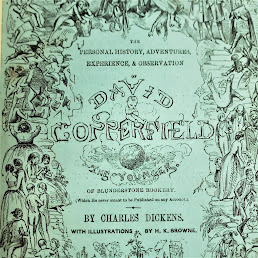
Arguably, to understand David Copperfield, it is essential to understand Charles Dickens. Several intersections need to be explored in this, his eighth major novel. Herein lies the challenge before we examine the fourteen older characters I will feature. In total, there are some one hundred and fourteen players throughout the book and, surprisingly, older adults only comprise just over twelve per cent. The significant intersections relate to David's coming of age and the semi-autobiographical aspect of him being a proxy for the child Dickens himself.
The challenge is to avoid over focusing. Though, as you will see, they cannot be ignored in literary criticism terms, but neither can the link to both the child and the thirty-seven-year-old Dickens' reflection of his own childhood.
Some of the intersections have been discussed previously ( Eastman 2026), but they and others come significantly into play throughout David Copperfield. This somewhat lengthy contextual overview will therefore touch upon a broad range, thus allowing us to better understand, in Part Two, the older character portrayals and of Dickens himself
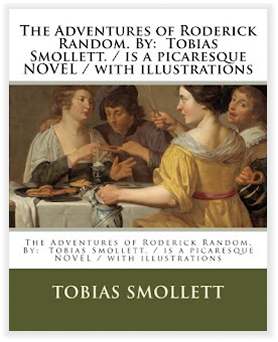
Figure 1. An Eighteenth Century Literary Influence on Dickens
It is said that Dickens's novels reflect eighteenth-century literary traditions and were especially influenced by the Scottish writer and surgeon Tobias Smollett (1721-1771) and, in particular, the Scottish novelist and poet Sir Walter Scott (1771-1832). Dickens took 'many devices of characterisation' from Smollett, especially 'tagging' portrayals of physical peculiarities, speech, mannerisms, compulsive gestures, and eccentric names (Ochojski, 1964). This was evident in David Copperfield, following the 18th-century picaresque approach, in that many characters are rogues, serving as the glue binding 'unconnected episodes' together.
As a young author, in his first two novels (Pickwick Papers and Oliver Twist), he used this technique to great effect. He also draws upon the Century's theatrical practice, which 'sharply defined villains, it's involved melodramatic plots, and farcical humour, also suggesting ideas for Dickens own plots and character portrayals ( Bright Notes Study Guide 1964). Older people in both theatre and literature did not fare well, nor did the Society figures of the Establishment, who were especially satirised. This remained the staple diet throughout Dickens' writing career and was used devastatingly if viewed through our modern-day gerontological perspective.
Dr Mervyn Eastman is a UK social care professional, author, and literary gerontology scholar. His work spans adult safeguarding, elder abuse awareness, ageing policy, public advocacy, and the representation of older people in literature.
DICKENS AND HIS OLDER PEOPLE: Transitional, Middle and Later Novels (1842–1870)
SUBTITLEDAVID COPPERFIELD — PART ONE: Contextual Overview
DATE30 April 2026
DICKENS AND HIS OLDER PEOPLE: Transitional, Middle and Later Novels (1842–1870)
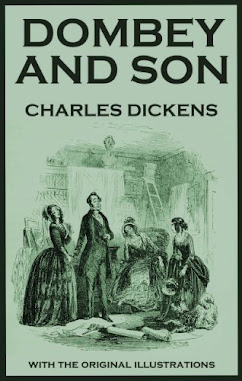
SUBTITLEDOMBEY AND SON — PART TWO: The Cast of Major and Supporting Older Adults
DATE12 February 2026
DICKENS’ OLDER PEOPLE: Transitional and Middle Novels (1842–1861)
SUBTITLEDOMBEY AND SON — PART ONE: Introduction and Context
DATE10 July 2025